A royal chapel built to hold heaven in glass
From the reign of Louis IX to modern restoration, Sainte-Chapelle tells a story of faith, monarchy, revolution, survival, and artistic mastery.
Table of Contents
Paris in the age of Louis IX
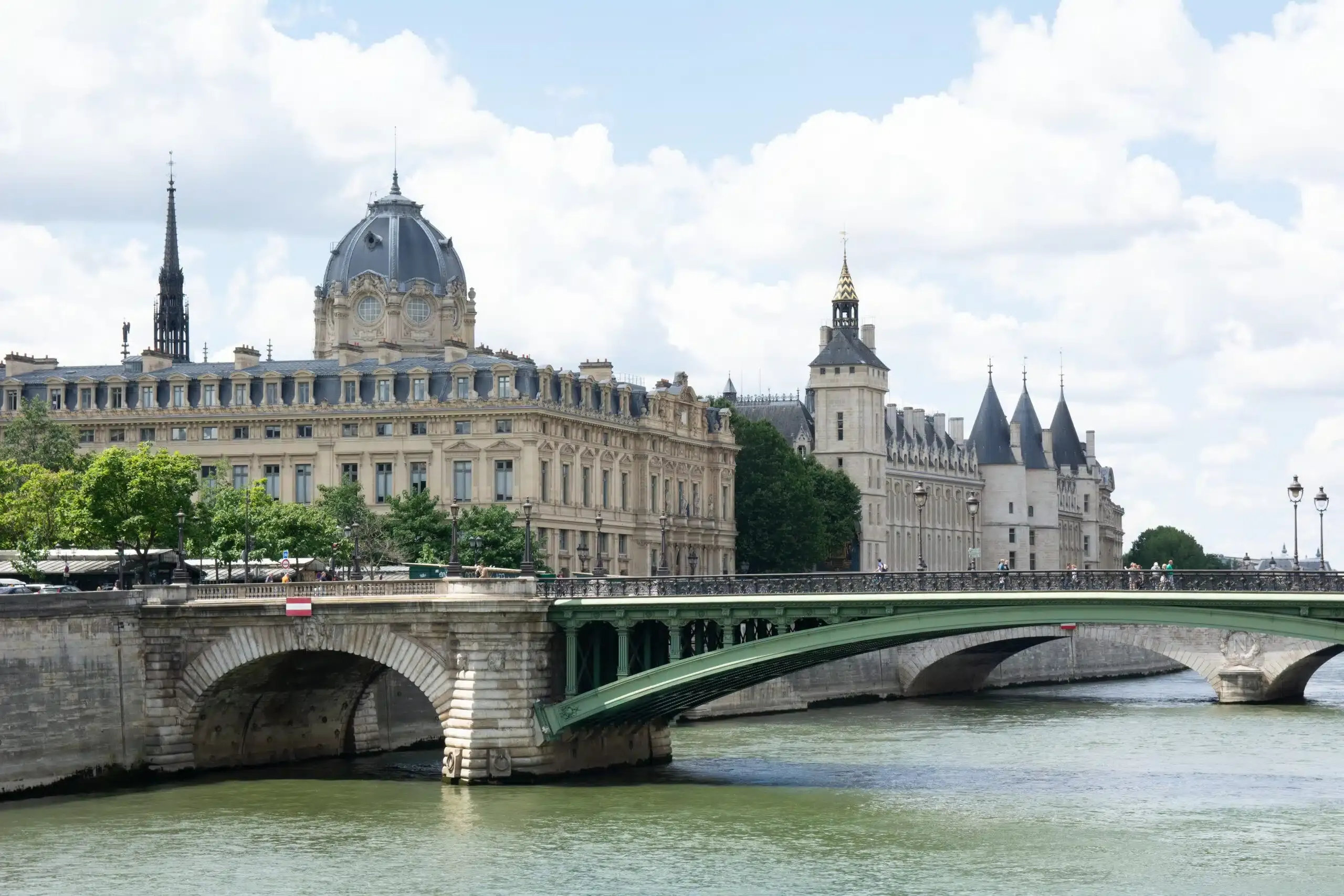
To understand Sainte-Chapelle, begin with 13th-century Paris, when the city was not yet the vast capital we know today but was already emerging as an intellectual and political center of Europe. Universities were flourishing, trade networks were expanding, and the Capetian monarchy was consolidating authority over a realm that had once been far more fragmented. At the center of this world stood King Louis IX, later canonized as Saint Louis, a ruler deeply invested in justice, religious devotion, and the symbolic language of kingship. His court cultivated an image of moral seriousness and sacred legitimacy, and architecture became one of the clearest ways to communicate that vision to subjects, ambassadors, and pilgrims alike.
Ile de la Cite, where Sainte-Chapelle still stands, was the ceremonial heart of the kingdom. The royal palace complex occupied this strategic island, and major judicial and administrative institutions gathered nearby. In this context, constructing an exceptional chapel beside the royal residence was not simply a private act of piety. It was a carefully staged statement: the French king presented himself as both a temporal sovereign and a guardian of Christendom. Sainte-Chapelle emerged from this world of political theater and genuine devotion, where liturgy, law, and monarchy were tightly interwoven in everyday governance.
Why Sainte-Chapelle was built
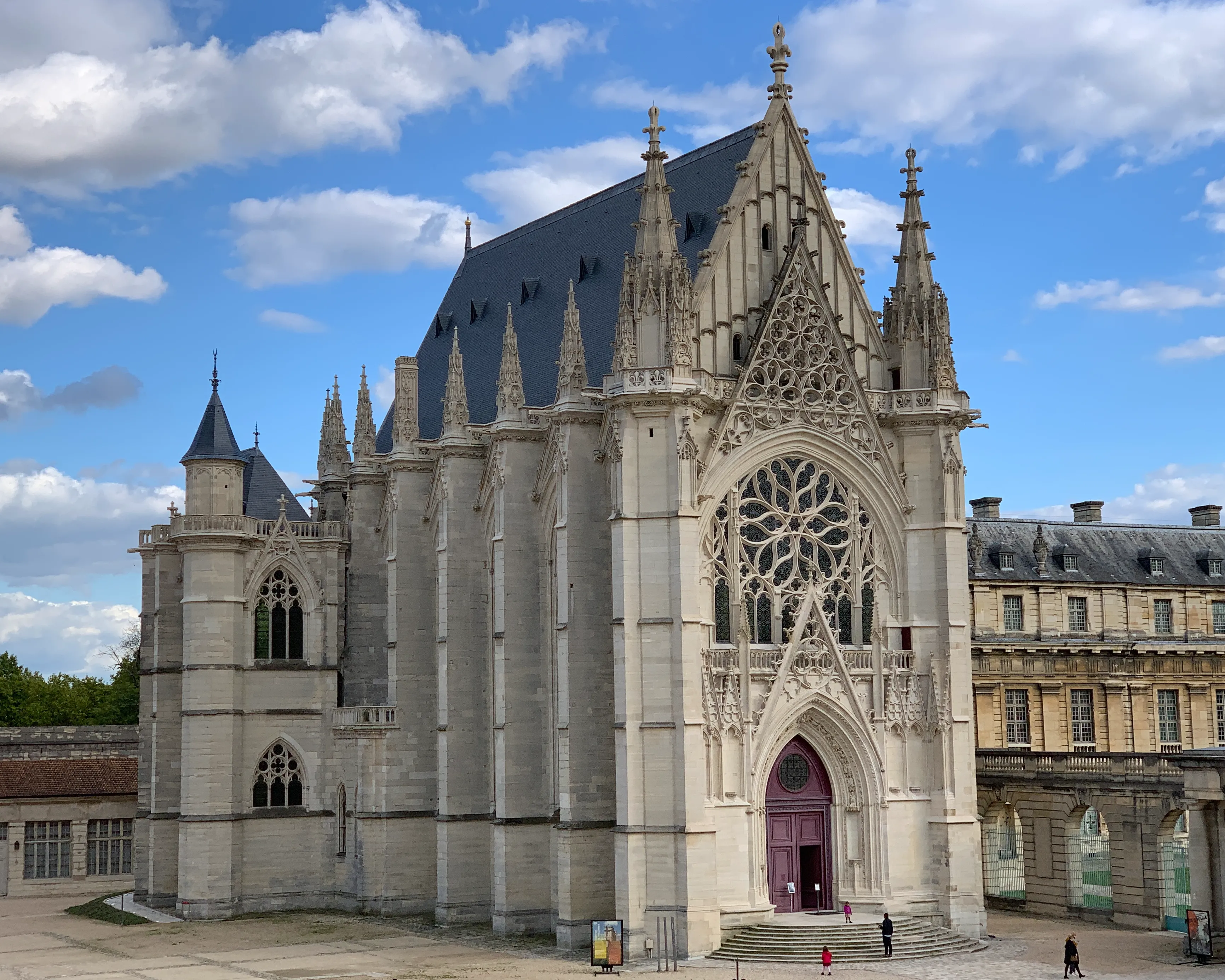
The primary reason for building Sainte-Chapelle was to house a collection of Passion relics acquired by Louis IX, most famously the Crown of Thorns. In medieval Europe, relics were not marginal curiosities; they were central to religious life, pilgrimage economies, and dynastic prestige. Acquiring such relics required immense financial resources and diplomatic negotiation, and possessing them elevated the spiritual status of a court in dramatic ways. Louis IX intended a setting worthy of these objects, one that would function as a sacred reliquary at architectural scale.
Construction began around 1241 and progressed with remarkable speed, with the chapel consecrated in 1248. This pace itself is extraordinary and speaks to concentrated royal funding, technical expertise, and clear symbolic urgency. The resulting structure was not conceived as a parish church for ordinary urban routines but as a palace chapel embedded in the royal sphere, where ceremony, theology, and kingship converged. From the beginning, Sainte-Chapelle was designed to impress, to instruct, and to move viewers emotionally through a choreography of ascent from the lower chapel to the radiant upper sanctuary.
Relics, prestige, and royal legitimacy
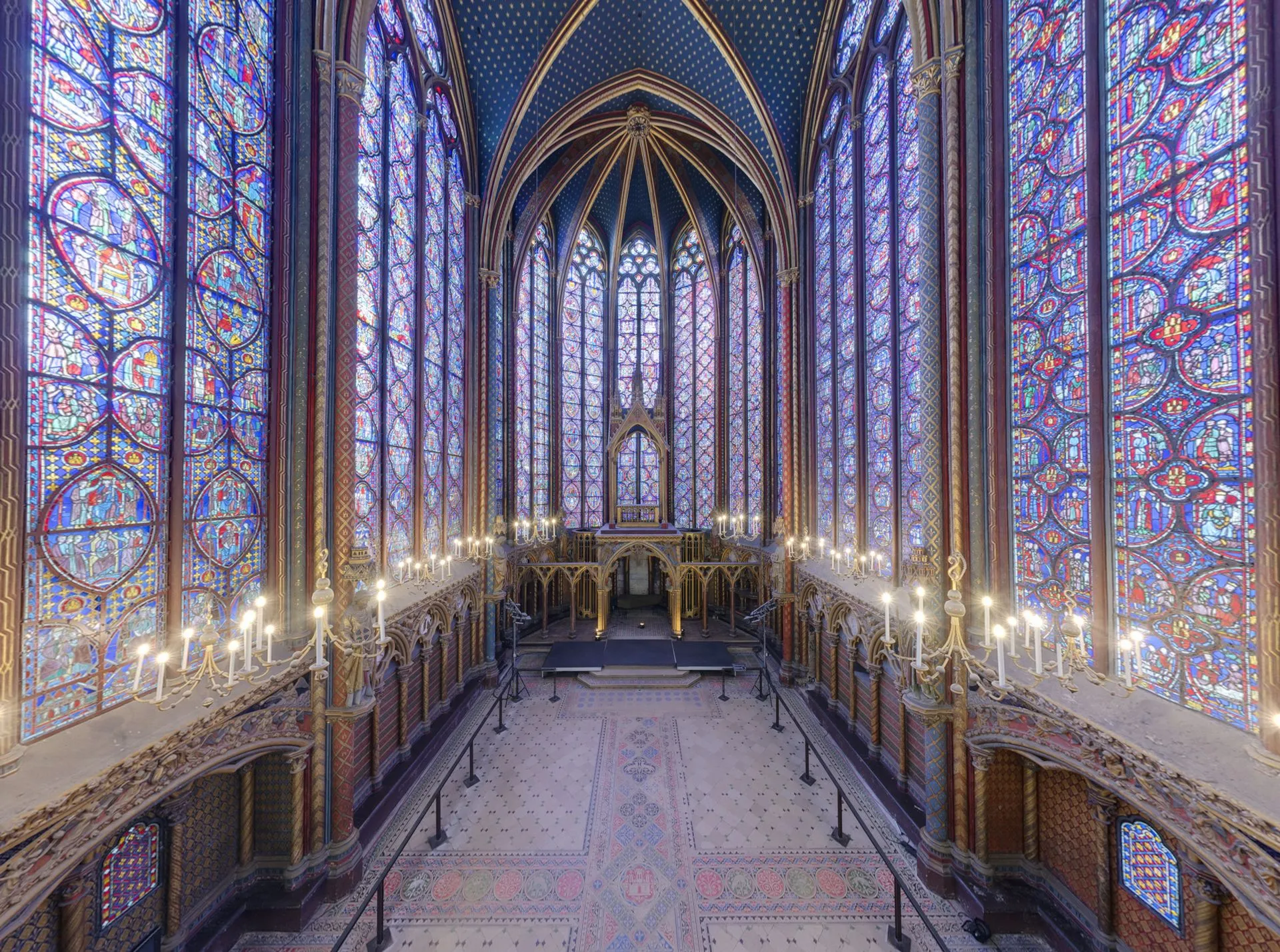
In the medieval imagination, relics created a direct bridge between earthly life and sacred history. Housing them in Paris associated the French monarchy with the Passion narrative itself and strengthened the crown's claim to divine favor. The political implications were immense: foreign envoys, nobles, clergy, and pilgrims who encountered these relics within a spectacular royal chapel were witnessing a crafted message about France's place in Christian Europe.
Louis IX's project can therefore be read on two levels at once. Spiritually, it reflected sincere devotion and the liturgical culture of the time. Politically, it elevated the monarchy through sacred proximity and visual magnificence. Sainte-Chapelle was the architectural embodiment of that dual purpose, where ceremony reinforced authority and beauty carried ideological weight. Even today, when visitors no longer experience relic cults in the same way, the building still communicates ambition, coherence, and a profound understanding of visual persuasion.
Architecture of light and verticality
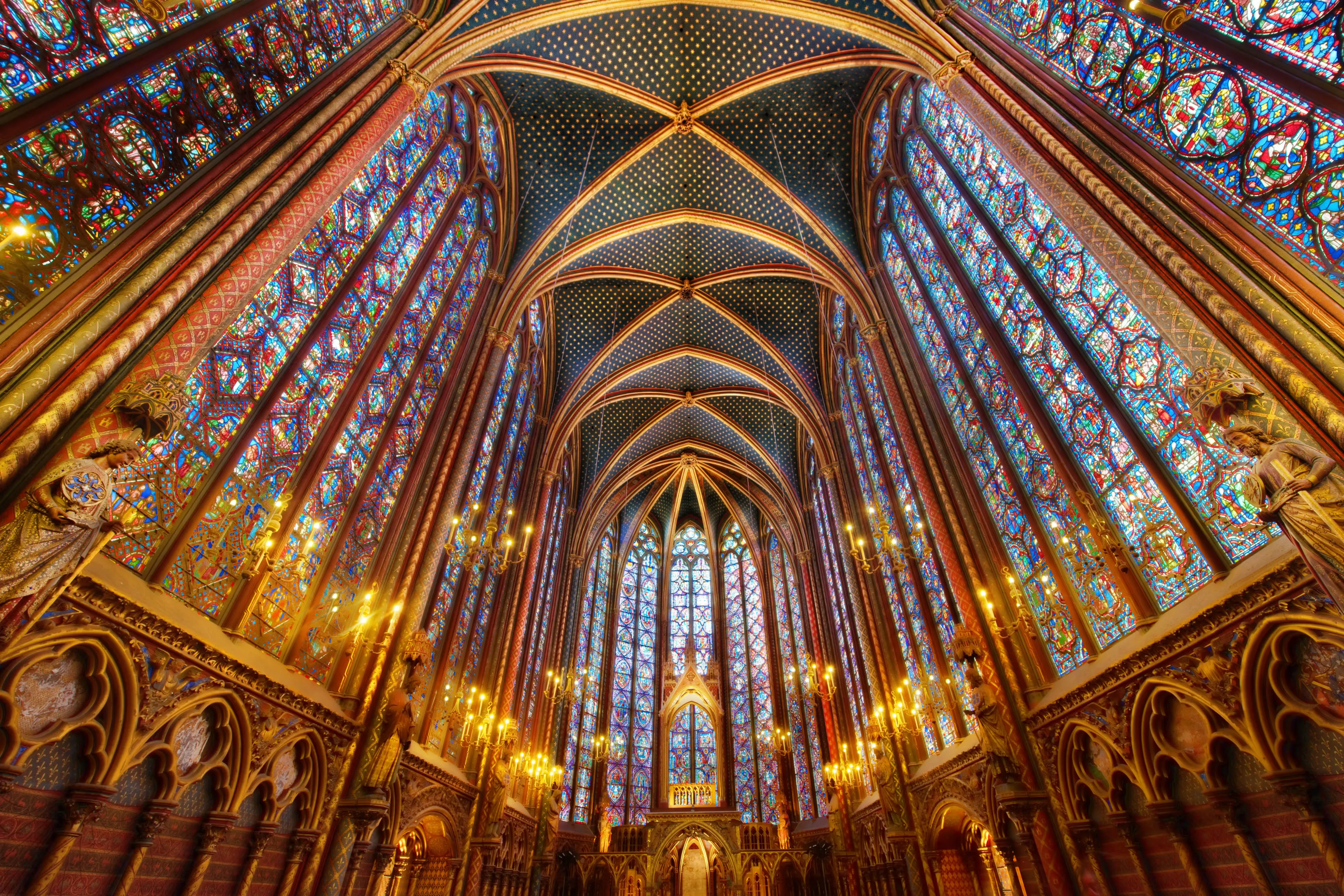
Sainte-Chapelle is one of the purest expressions of Rayonnant Gothic architecture, a style that pushed toward luminosity, refinement, and skeletal stone structures that could support larger stained-glass expanses. In the upper chapel, masonry seems to retreat so color and narrative can dominate. Slender colonnettes, pointed arches, and ribbed vaults create a vertical rhythm that directs the eye upward, while daylight passing through the glass continuously reshapes the atmosphere.
What feels effortless to modern visitors is actually a high-precision technical achievement. The balance between structural support and visual openness is delicate, and the choreography of painted surfaces, sculpture, and glazing was intentionally coordinated. The result is immersive rather than merely decorative. You do not just look at a single artwork in Sainte-Chapelle; you stand inside a total work where architecture, iconography, and light collaborate to shape emotion, memory, and meaning.
The lower and upper chapels
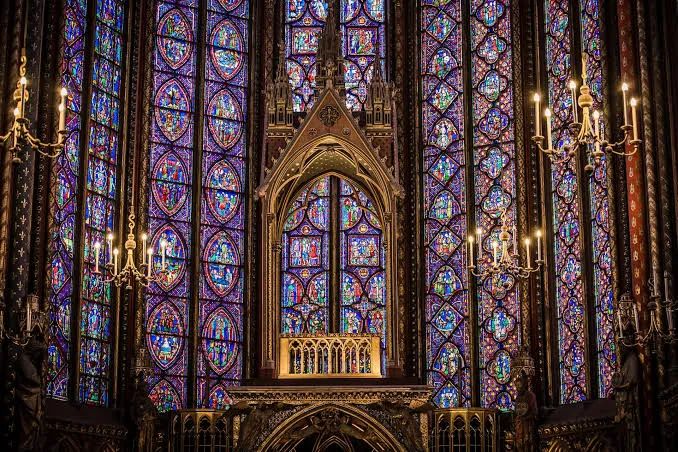
The two-level plan reflects social and ceremonial hierarchy. The lower chapel, dedicated to the Virgin Mary, served palace staff and daily devotional functions. It is compact, richly painted, and visually dense, with decorative motifs and color schemes that prepare the visitor for what comes next. Its atmosphere is intimate, almost protective, like an antechamber of symbols and prayer.
The upper chapel, in contrast, was reserved for the king and closely associated with relic display. Here the spatial experience expands dramatically. Height, light, and narrative scale produce a sense of elevation that is both physical and theological. Moving from lower to upper chapel is not just circulation through a building; it is a planned symbolic ascent, from earthly enclosure to radiant revelation, one of the most compelling experiential sequences in medieval architecture.
Revolution, damage, and changing uses
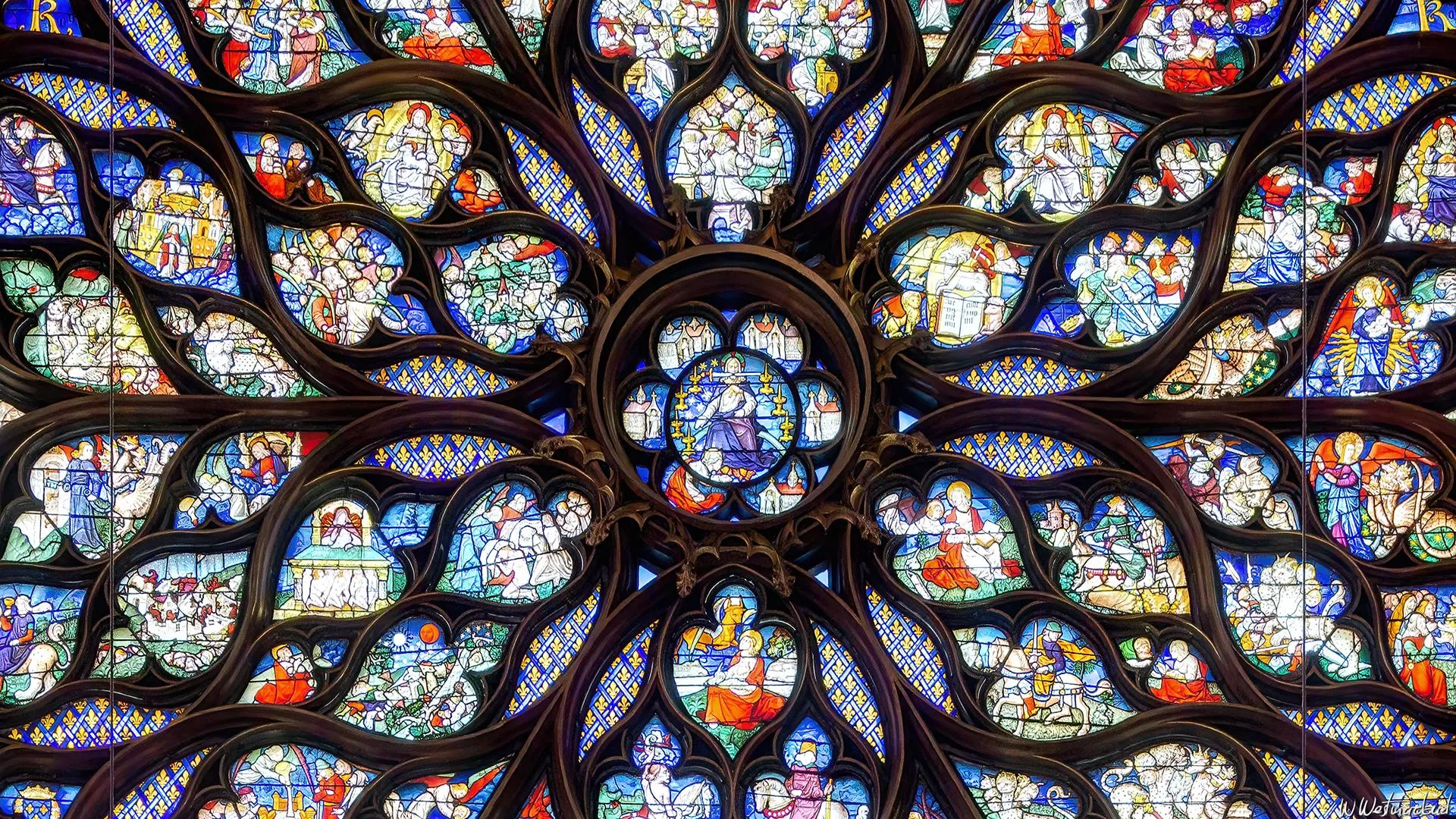
Like many royal and religious monuments, Sainte-Chapelle endured severe disruption during the French Revolution. Sacred furnishings were removed or dispersed, relic-related functions ended, and parts of the building suffered neglect and alterations. In different periods, the chapel was used for practical administrative needs that did not prioritize preservation of medieval fabric or liturgical context.
These transformations remind us that monuments are never frozen outside history. They are vulnerable to ideology, changing institutions, and shifting urban priorities. Sainte-Chapelle survived, but not unchanged. By the time 19th-century scholars and architects reassessed medieval heritage, significant intervention was needed to recover legibility, repair damage, and stabilize the structure for the future.
Nineteenth-century rediscovery and restoration
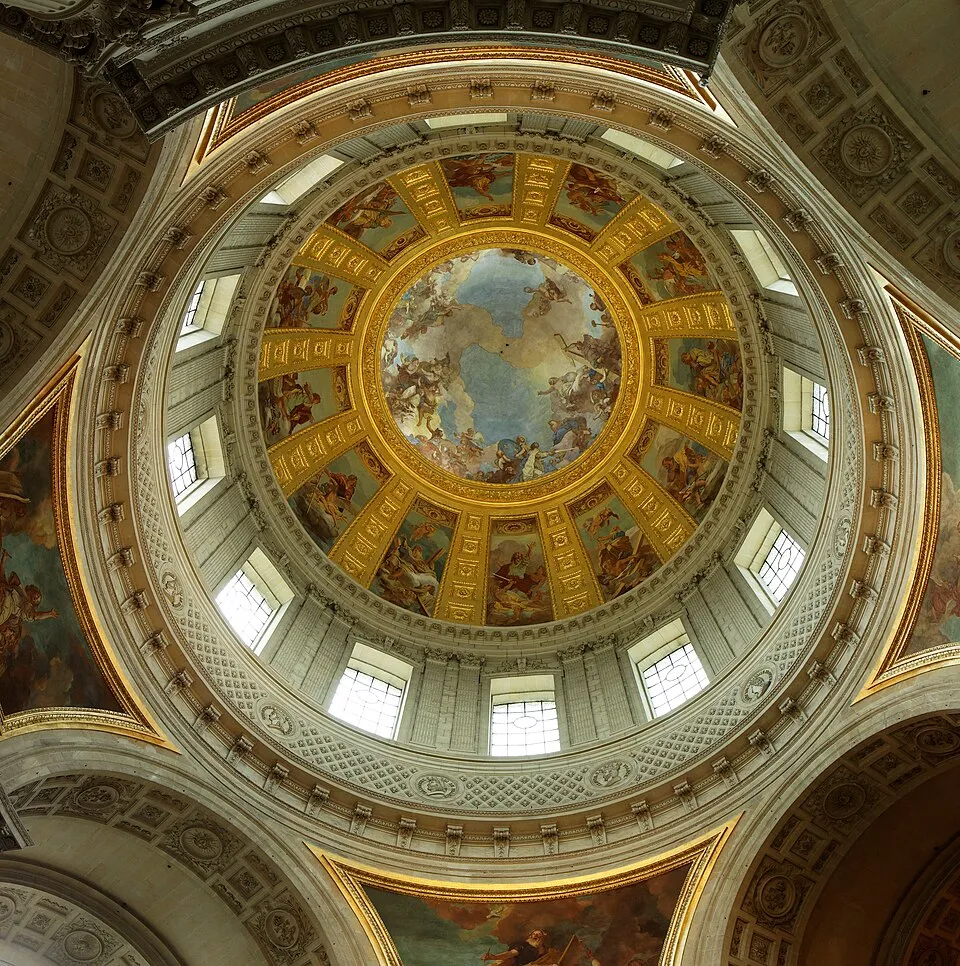
The 19th century brought renewed appreciation for Gothic architecture across France, and Sainte-Chapelle became a major restoration focus. Architects and conservators undertook extensive campaigns to repair stonework, reconstruct missing elements, and protect stained glass that had suffered from age, pollution, and earlier damage. This period did not simply preserve the building; it also reinterpreted it through contemporary restoration philosophies.
Some interventions aimed at historical fidelity, while others reflected 19th-century ideas of stylistic unity. Even so, without these efforts, much of what visitors admire today might have been lost. Modern conservation continues to build on that legacy with updated scientific methods, careful cleaning protocols, and monitoring systems designed to preserve both structure and color intensity in a demanding urban environment.
How to read the stained-glass narratives
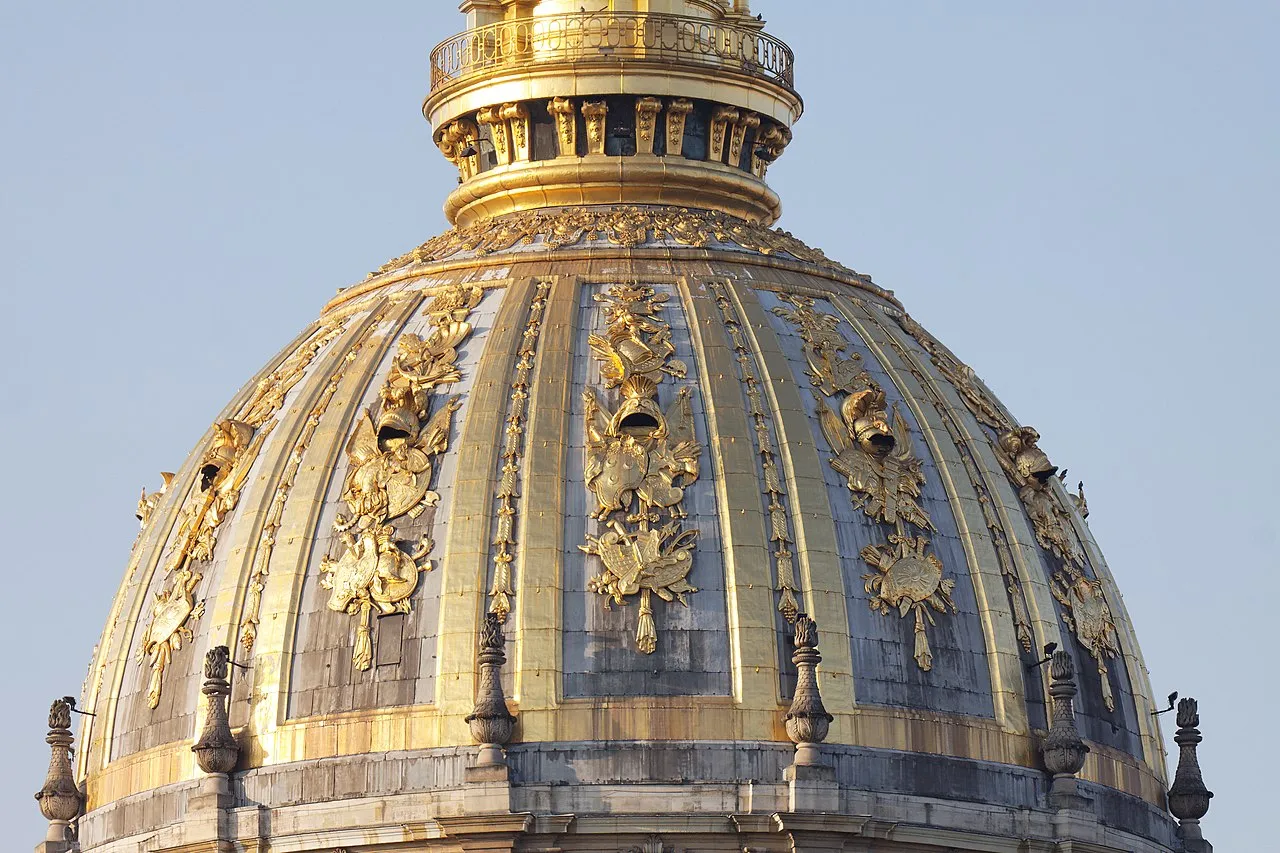
The stained-glass program is vast, and first-time visitors can feel overwhelmed. A helpful approach is to read it as narrative bands from bottom to top, following scenes that move through biblical time and theological interpretation. The windows include stories from the Old and New Testaments, culminating in themes linked to redemption, kingship, and sacred history.
You do not need to identify every panel to appreciate the effect. Focus on recurring gestures, color contrasts, and compositional rhythm. Notice how architecture frames each scene and how daylight changes visibility across the day. The more time you spend with a few selected windows, the more coherent the whole cycle feels, and the less it appears as decorative pattern alone.
Symbolism, theology, and political message
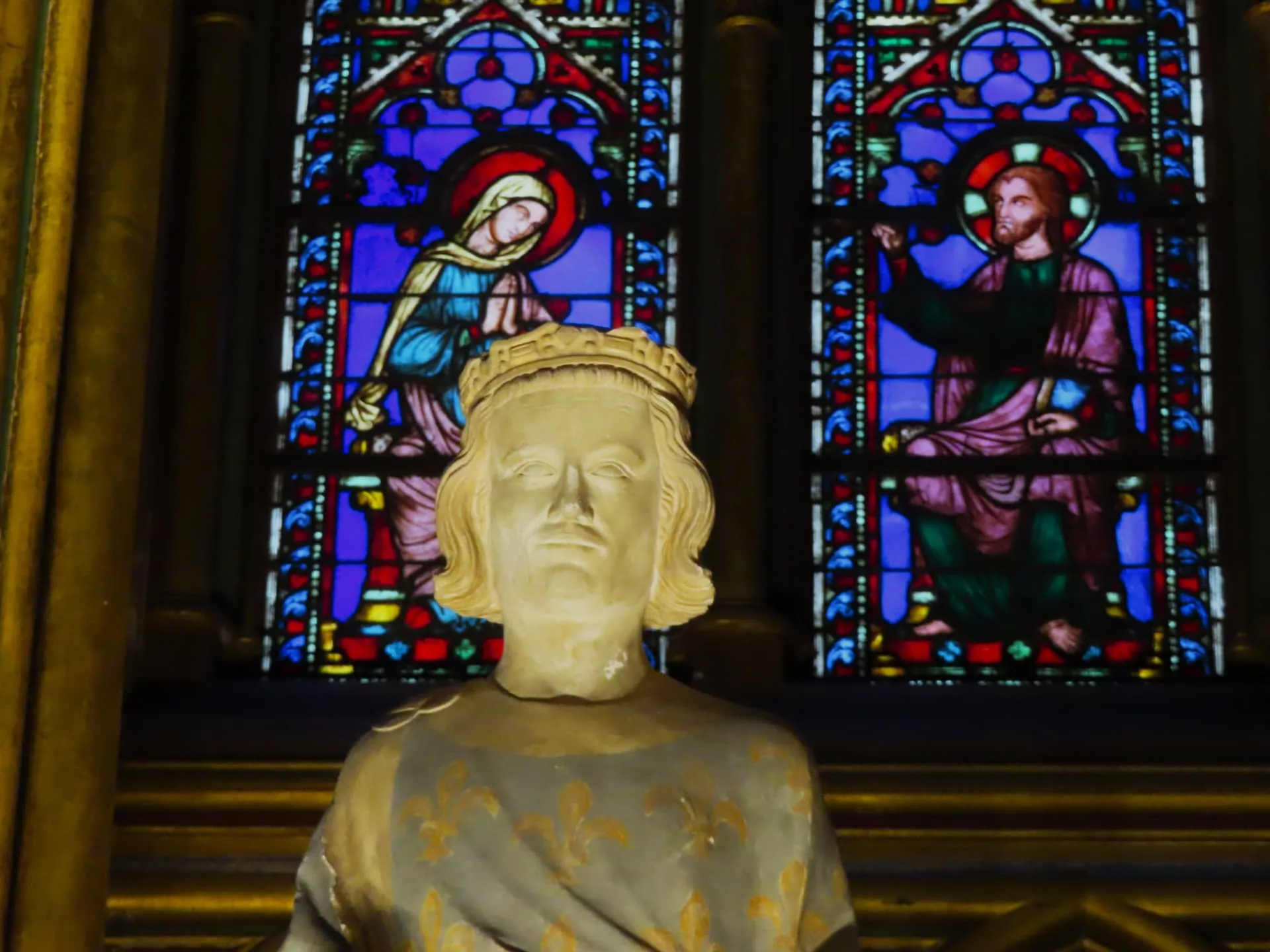
Sainte-Chapelle communicates several layers of meaning simultaneously. Theological themes of salvation and sacred kingship are embedded in visual narratives, while heraldic references and courtly context signal dynastic legitimacy. In this sense, the chapel is both devotional space and political text, crafted for audiences who could read symbols as clearly as written proclamations.
Its brilliance lies in integration. Nothing feels random: glass cycles, painted decoration, sculpture, and spatial sequencing reinforce each other. For medieval viewers, this coherence validated a worldview in which monarchy, justice, and religion were mutually sustaining. For modern visitors, even outside that worldview, the building remains persuasive because its design logic is so complete and emotionally immediate.
Sainte-Chapelle in modern Paris
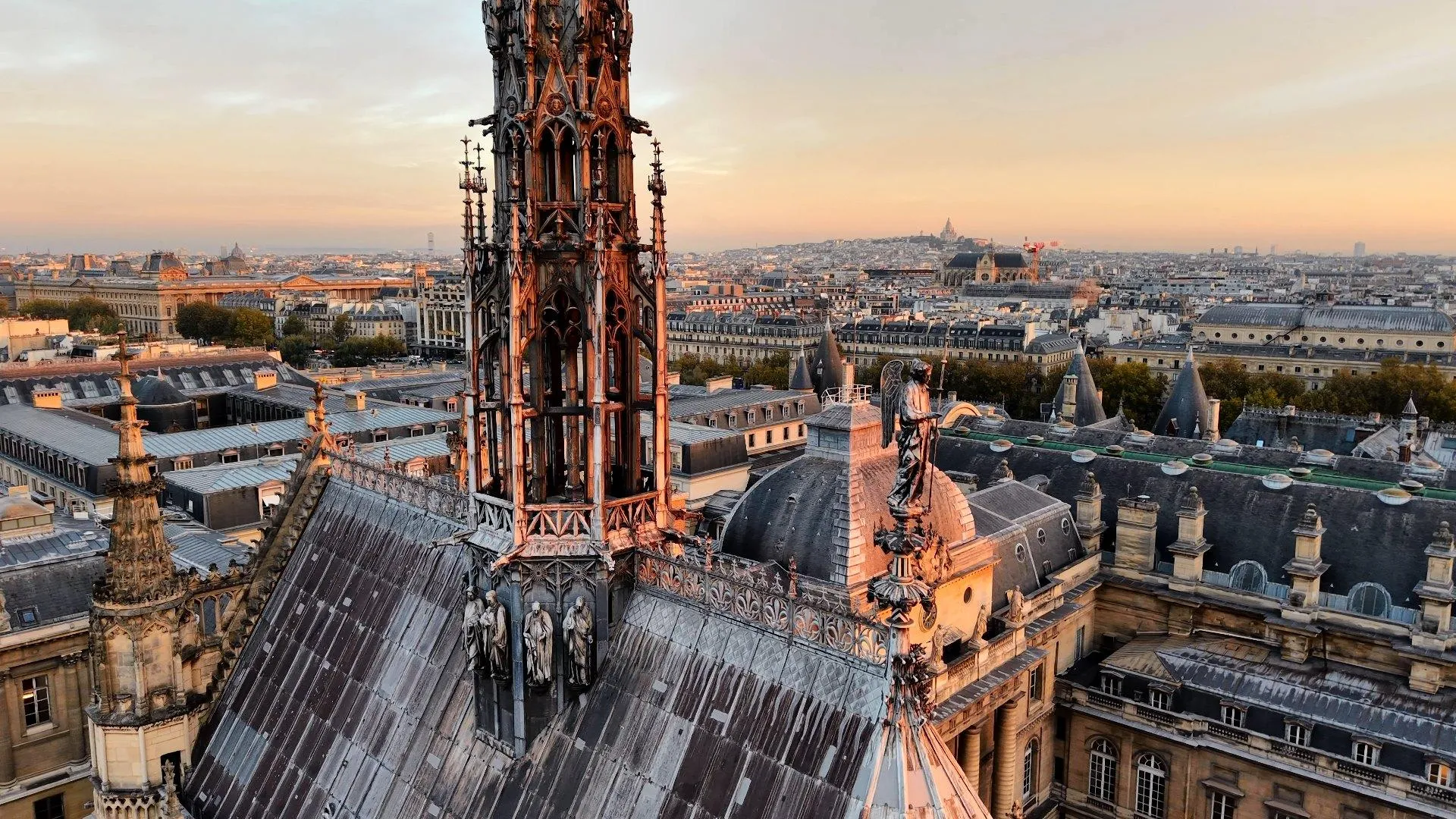
Today, Sainte-Chapelle sits within a busy cultural landscape where travelers balance iconic highlights with practical constraints like timed entries and transport schedules. Yet despite this modern rhythm, the chapel still interrupts the pace of the city. Visitors often arrive with quick-checklist intentions and leave having stayed longer than planned, drawn into a quieter mode of looking.
Its central location makes it easy to combine with nearby sites, but it also risks being underestimated as a brief stop. In reality, Sainte-Chapelle rewards patience. Ten extra minutes can reveal entirely different color moods as clouds shift or sunlight angles change. In that sense, the monument remains alive: the experience is never exactly the same twice.
Conservation challenges today
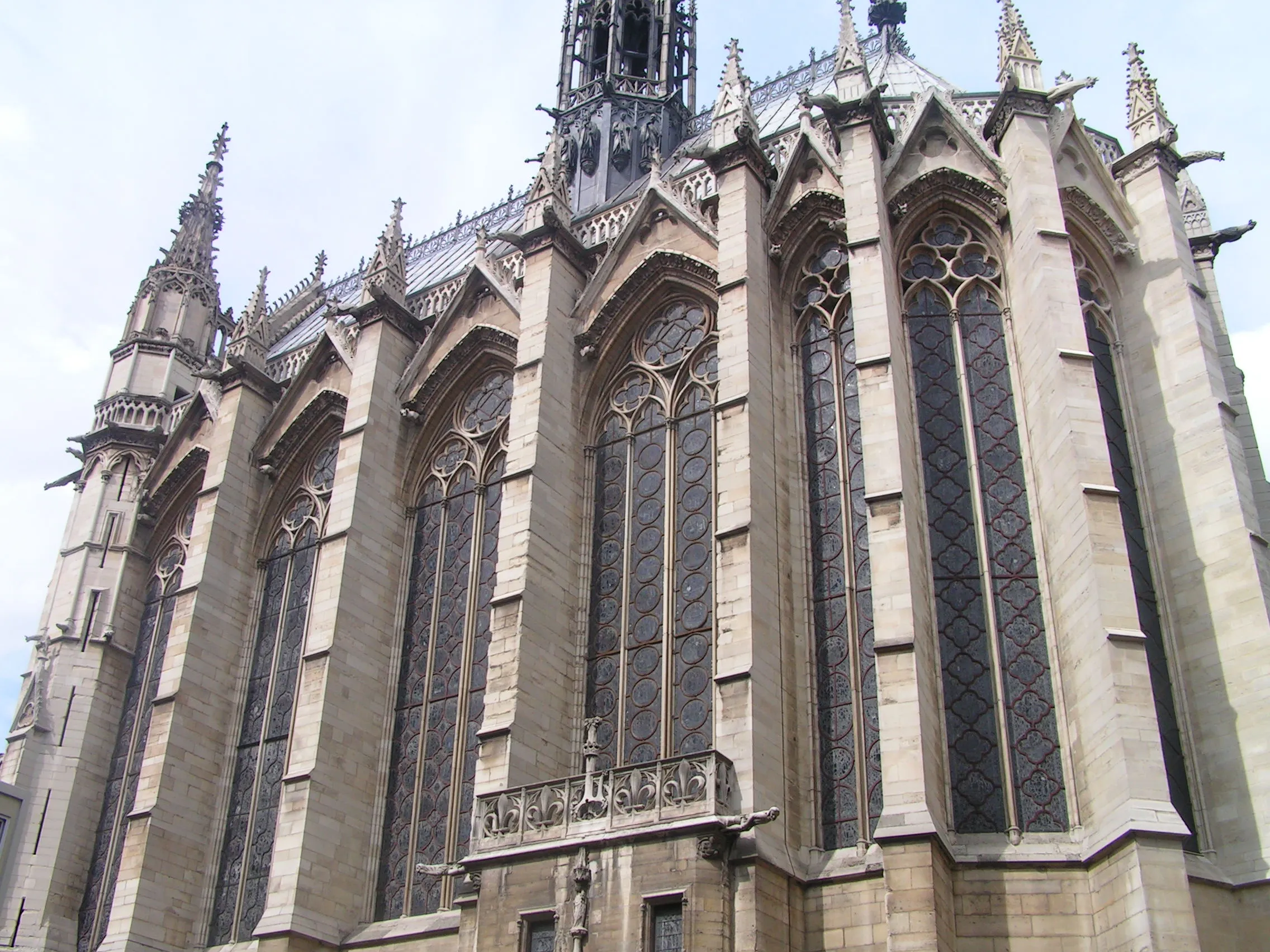
Preserving Sainte-Chapelle involves constant balancing between public access and material fragility. Stained glass is sensitive to pollution, thermal stress, and cumulative wear, while stone and painted surfaces respond to humidity changes and urban environmental pressures. Conservation teams must plan interventions that are minimally invasive yet effective over long time horizons.
Modern conservation also includes interpretation: helping visitors understand why certain areas may be protected, why lighting and circulation can be controlled, and why restoration is ongoing rather than occasional. This transparency matters because long-term protection depends not only on expert work but also on public appreciation of what is at stake.
Interesting facts before you visit
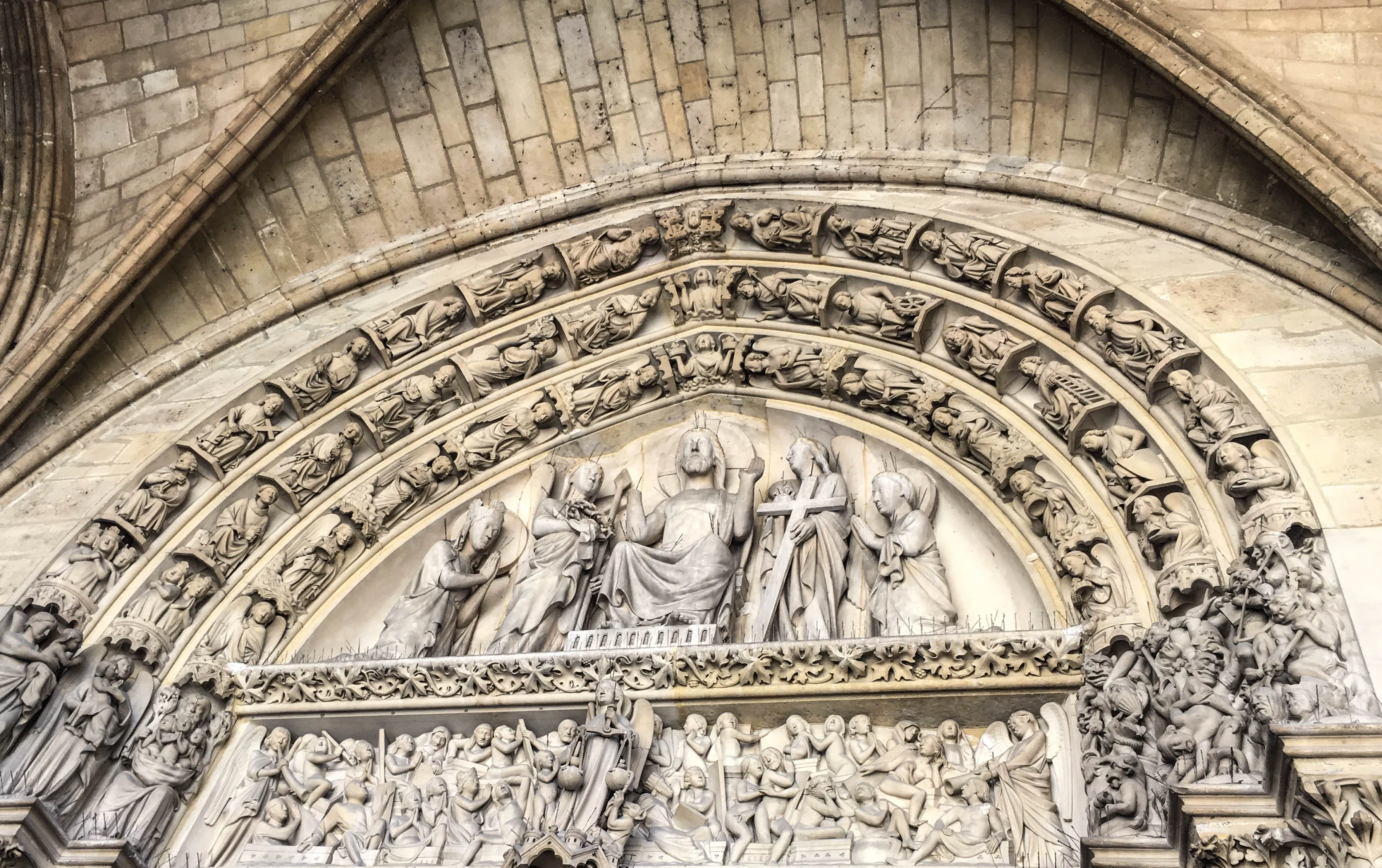
One fascinating fact is the speed of the original construction, which was unusually rapid for a monument of this ambition. Another is how radically the interior perception depends on weather: the same windows can appear jewel-like and intense in direct sun, or subtler and more contemplative under overcast skies. The chapel also demonstrates medieval storytelling at scale, turning architecture into a readable visual scripture.
Many visitors are surprised that the lower chapel, though smaller, is artistically crucial and not merely a passageway. Others discover that Sainte-Chapelle's history is inseparable from the neighboring institutions of power and justice on Ile de la Cite. Seen together, these details make the monument feel less like an isolated postcard icon and more like a deeply rooted chapter of Parisian and European history.
Why Sainte-Chapelle still feels miraculous
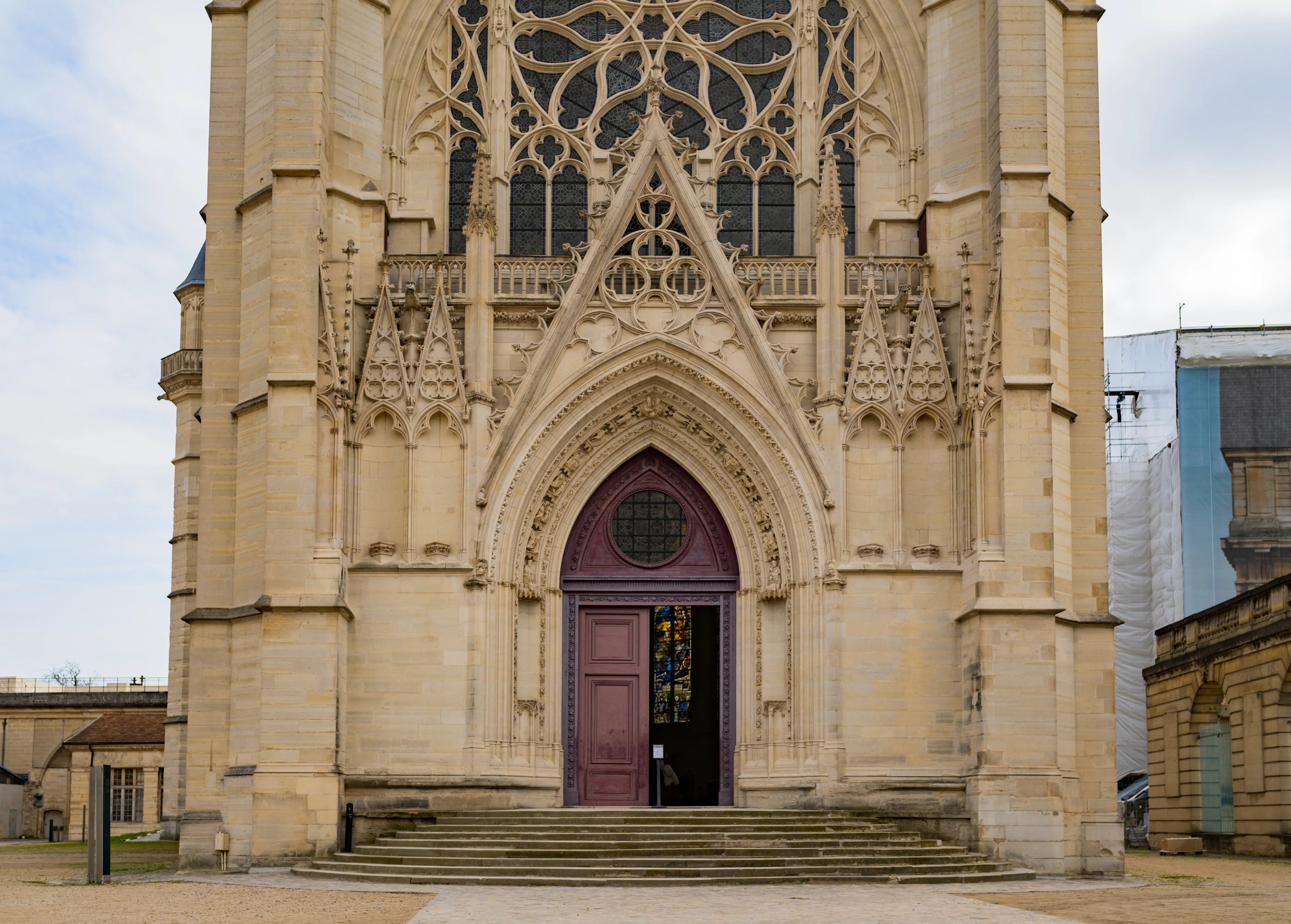
Sainte-Chapelle continues to move people because it combines technical mastery with emotional clarity. You feel the ambition of its builders, the devotion of its original purpose, and the vulnerability of everything that had to be saved across centuries of conflict and change. It is not only beautiful; it is resilient, and that resilience is part of its power.
By the time you leave, what stays with you is often not a single detail but an atmosphere: filtered light, vertical silence, and the sense that stone and glass can still shape how we perceive time. In a city full of celebrated monuments, Sainte-Chapelle remains unique because it does not merely show history. It lets you stand inside it.
Table of Contents
Paris in the age of Louis IX
To understand Sainte-Chapelle, begin with 13th-century Paris, when the city was not yet the vast capital we know today but was already emerging as an intellectual and political center of Europe. Universities were flourishing, trade networks were expanding, and the Capetian monarchy was consolidating authority over a realm that had once been far more fragmented. At the center of this world stood King Louis IX, later canonized as Saint Louis, a ruler deeply invested in justice, religious devotion, and the symbolic language of kingship. His court cultivated an image of moral seriousness and sacred legitimacy, and architecture became one of the clearest ways to communicate that vision to subjects, ambassadors, and pilgrims alike.
Ile de la Cite, where Sainte-Chapelle still stands, was the ceremonial heart of the kingdom. The royal palace complex occupied this strategic island, and major judicial and administrative institutions gathered nearby. In this context, constructing an exceptional chapel beside the royal residence was not simply a private act of piety. It was a carefully staged statement: the French king presented himself as both a temporal sovereign and a guardian of Christendom. Sainte-Chapelle emerged from this world of political theater and genuine devotion, where liturgy, law, and monarchy were tightly interwoven in everyday governance.
Why Sainte-Chapelle was built
The primary reason for building Sainte-Chapelle was to house a collection of Passion relics acquired by Louis IX, most famously the Crown of Thorns. In medieval Europe, relics were not marginal curiosities; they were central to religious life, pilgrimage economies, and dynastic prestige. Acquiring such relics required immense financial resources and diplomatic negotiation, and possessing them elevated the spiritual status of a court in dramatic ways. Louis IX intended a setting worthy of these objects, one that would function as a sacred reliquary at architectural scale.
Construction began around 1241 and progressed with remarkable speed, with the chapel consecrated in 1248. This pace itself is extraordinary and speaks to concentrated royal funding, technical expertise, and clear symbolic urgency. The resulting structure was not conceived as a parish church for ordinary urban routines but as a palace chapel embedded in the royal sphere, where ceremony, theology, and kingship converged. From the beginning, Sainte-Chapelle was designed to impress, to instruct, and to move viewers emotionally through a choreography of ascent from the lower chapel to the radiant upper sanctuary.
Relics, prestige, and royal legitimacy
In the medieval imagination, relics created a direct bridge between earthly life and sacred history. Housing them in Paris associated the French monarchy with the Passion narrative itself and strengthened the crown's claim to divine favor. The political implications were immense: foreign envoys, nobles, clergy, and pilgrims who encountered these relics within a spectacular royal chapel were witnessing a crafted message about France's place in Christian Europe.
Louis IX's project can therefore be read on two levels at once. Spiritually, it reflected sincere devotion and the liturgical culture of the time. Politically, it elevated the monarchy through sacred proximity and visual magnificence. Sainte-Chapelle was the architectural embodiment of that dual purpose, where ceremony reinforced authority and beauty carried ideological weight. Even today, when visitors no longer experience relic cults in the same way, the building still communicates ambition, coherence, and a profound understanding of visual persuasion.
Architecture of light and verticality
Sainte-Chapelle is one of the purest expressions of Rayonnant Gothic architecture, a style that pushed toward luminosity, refinement, and skeletal stone structures that could support larger stained-glass expanses. In the upper chapel, masonry seems to retreat so color and narrative can dominate. Slender colonnettes, pointed arches, and ribbed vaults create a vertical rhythm that directs the eye upward, while daylight passing through the glass continuously reshapes the atmosphere.
What feels effortless to modern visitors is actually a high-precision technical achievement. The balance between structural support and visual openness is delicate, and the choreography of painted surfaces, sculpture, and glazing was intentionally coordinated. The result is immersive rather than merely decorative. You do not just look at a single artwork in Sainte-Chapelle; you stand inside a total work where architecture, iconography, and light collaborate to shape emotion, memory, and meaning.
The lower and upper chapels
The two-level plan reflects social and ceremonial hierarchy. The lower chapel, dedicated to the Virgin Mary, served palace staff and daily devotional functions. It is compact, richly painted, and visually dense, with decorative motifs and color schemes that prepare the visitor for what comes next. Its atmosphere is intimate, almost protective, like an antechamber of symbols and prayer.
The upper chapel, in contrast, was reserved for the king and closely associated with relic display. Here the spatial experience expands dramatically. Height, light, and narrative scale produce a sense of elevation that is both physical and theological. Moving from lower to upper chapel is not just circulation through a building; it is a planned symbolic ascent, from earthly enclosure to radiant revelation, one of the most compelling experiential sequences in medieval architecture.
Revolution, damage, and changing uses
Like many royal and religious monuments, Sainte-Chapelle endured severe disruption during the French Revolution. Sacred furnishings were removed or dispersed, relic-related functions ended, and parts of the building suffered neglect and alterations. In different periods, the chapel was used for practical administrative needs that did not prioritize preservation of medieval fabric or liturgical context.
These transformations remind us that monuments are never frozen outside history. They are vulnerable to ideology, changing institutions, and shifting urban priorities. Sainte-Chapelle survived, but not unchanged. By the time 19th-century scholars and architects reassessed medieval heritage, significant intervention was needed to recover legibility, repair damage, and stabilize the structure for the future.
Nineteenth-century rediscovery and restoration
The 19th century brought renewed appreciation for Gothic architecture across France, and Sainte-Chapelle became a major restoration focus. Architects and conservators undertook extensive campaigns to repair stonework, reconstruct missing elements, and protect stained glass that had suffered from age, pollution, and earlier damage. This period did not simply preserve the building; it also reinterpreted it through contemporary restoration philosophies.
Some interventions aimed at historical fidelity, while others reflected 19th-century ideas of stylistic unity. Even so, without these efforts, much of what visitors admire today might have been lost. Modern conservation continues to build on that legacy with updated scientific methods, careful cleaning protocols, and monitoring systems designed to preserve both structure and color intensity in a demanding urban environment.
How to read the stained-glass narratives
The stained-glass program is vast, and first-time visitors can feel overwhelmed. A helpful approach is to read it as narrative bands from bottom to top, following scenes that move through biblical time and theological interpretation. The windows include stories from the Old and New Testaments, culminating in themes linked to redemption, kingship, and sacred history.
You do not need to identify every panel to appreciate the effect. Focus on recurring gestures, color contrasts, and compositional rhythm. Notice how architecture frames each scene and how daylight changes visibility across the day. The more time you spend with a few selected windows, the more coherent the whole cycle feels, and the less it appears as decorative pattern alone.
Symbolism, theology, and political message
Sainte-Chapelle communicates several layers of meaning simultaneously. Theological themes of salvation and sacred kingship are embedded in visual narratives, while heraldic references and courtly context signal dynastic legitimacy. In this sense, the chapel is both devotional space and political text, crafted for audiences who could read symbols as clearly as written proclamations.
Its brilliance lies in integration. Nothing feels random: glass cycles, painted decoration, sculpture, and spatial sequencing reinforce each other. For medieval viewers, this coherence validated a worldview in which monarchy, justice, and religion were mutually sustaining. For modern visitors, even outside that worldview, the building remains persuasive because its design logic is so complete and emotionally immediate.
Sainte-Chapelle in modern Paris
Today, Sainte-Chapelle sits within a busy cultural landscape where travelers balance iconic highlights with practical constraints like timed entries and transport schedules. Yet despite this modern rhythm, the chapel still interrupts the pace of the city. Visitors often arrive with quick-checklist intentions and leave having stayed longer than planned, drawn into a quieter mode of looking.
Its central location makes it easy to combine with nearby sites, but it also risks being underestimated as a brief stop. In reality, Sainte-Chapelle rewards patience. Ten extra minutes can reveal entirely different color moods as clouds shift or sunlight angles change. In that sense, the monument remains alive: the experience is never exactly the same twice.
Conservation challenges today
Preserving Sainte-Chapelle involves constant balancing between public access and material fragility. Stained glass is sensitive to pollution, thermal stress, and cumulative wear, while stone and painted surfaces respond to humidity changes and urban environmental pressures. Conservation teams must plan interventions that are minimally invasive yet effective over long time horizons.
Modern conservation also includes interpretation: helping visitors understand why certain areas may be protected, why lighting and circulation can be controlled, and why restoration is ongoing rather than occasional. This transparency matters because long-term protection depends not only on expert work but also on public appreciation of what is at stake.
Interesting facts before you visit
One fascinating fact is the speed of the original construction, which was unusually rapid for a monument of this ambition. Another is how radically the interior perception depends on weather: the same windows can appear jewel-like and intense in direct sun, or subtler and more contemplative under overcast skies. The chapel also demonstrates medieval storytelling at scale, turning architecture into a readable visual scripture.
Many visitors are surprised that the lower chapel, though smaller, is artistically crucial and not merely a passageway. Others discover that Sainte-Chapelle's history is inseparable from the neighboring institutions of power and justice on Ile de la Cite. Seen together, these details make the monument feel less like an isolated postcard icon and more like a deeply rooted chapter of Parisian and European history.
Why Sainte-Chapelle still feels miraculous
Sainte-Chapelle continues to move people because it combines technical mastery with emotional clarity. You feel the ambition of its builders, the devotion of its original purpose, and the vulnerability of everything that had to be saved across centuries of conflict and change. It is not only beautiful; it is resilient, and that resilience is part of its power.
By the time you leave, what stays with you is often not a single detail but an atmosphere: filtered light, vertical silence, and the sense that stone and glass can still shape how we perceive time. In a city full of celebrated monuments, Sainte-Chapelle remains unique because it does not merely show history. It lets you stand inside it.